

Bearing heaters are essential tools in various industries, facilitating the installation and removal of bearings by heating them to a suitable temperature. One critical factor that significantly influences the heating process of bearings is the bearing clearance. As a bearing heater supplier, understanding the effect of bearing clearance on the heating process is crucial for providing high - quality products and optimal solutions to our customers.
Understanding Bearing Clearance
Bearing clearance refers to the internal clearance within a bearing, which is the amount of movement or play between the rolling elements (balls or rollers) and the raceways. It is typically classified into radial clearance and axial clearance. Radial clearance is the radial displacement between the inner and outer rings of the bearing when there is no load applied, while axial clearance is the axial displacement between the two rings.
The bearing clearance is affected by several factors, including the manufacturing process, material properties, and the operating conditions. Different applications require different levels of bearing clearance. For example, in high - speed applications, a smaller clearance may be preferred to ensure better stability and reduced vibration, while in applications with high - temperature or heavy - load conditions, a larger clearance may be necessary to accommodate thermal expansion and prevent premature failure.

Impact of Bearing Clearance on the Heating Process
Heat Transfer Efficiency
The bearing clearance can have a significant impact on the heat transfer efficiency during the heating process. When a bearing is heated using a bearing heater, the heat is transferred from the heater to the bearing through conduction, convection, and radiation. A proper bearing clearance allows for better heat distribution within the bearing.
In a bearing with an appropriate clearance, the rolling elements and raceways have enough space for the heat to spread evenly. This ensures that all parts of the bearing reach the desired temperature simultaneously, reducing the risk of thermal stress and deformation. On the other hand, if the bearing clearance is too small, the heat transfer may be restricted, leading to uneven heating. Some areas of the bearing may overheat while others remain relatively cool, which can cause thermal gradients and potential damage to the bearing material.
Conversely, an excessively large bearing clearance may also affect heat transfer. In this case, the rolling elements may move more freely, reducing the contact area between the elements and the raceways. This can result in a decrease in the conduction of heat, making the heating process less efficient and increasing the time required to reach the target temperature.
Thermal Expansion and Fit
During the heating process, bearings expand due to the increase in temperature. The bearing clearance plays a crucial role in accommodating this thermal expansion. A well - designed bearing clearance ensures that the bearing can expand without causing excessive stress on the surrounding components or the bearing itself.
If the bearing clearance is too small, the thermal expansion of the bearing may cause it to bind or seize. This can lead to serious damage to the bearing and the equipment in which it is installed. For example, in a motor, a seized bearing can cause the motor to overheat, reduce its efficiency, and even lead to a complete breakdown.
On the other hand, if the bearing clearance is too large, the bearing may not fit properly after heating and cooling. This can result in excessive vibration, noise, and premature wear of the bearing. Therefore, it is essential to select the appropriate bearing clearance based on the operating conditions and the heating requirements.
Heating Time
The bearing clearance also affects the heating time. As mentioned earlier, a proper clearance allows for better heat transfer, which means that the bearing can reach the desired temperature more quickly. In contrast, a bearing with an improper clearance may require a longer heating time to achieve the same temperature.
This is not only inefficient but also increases the energy consumption of the bearing heater. As a bearing heater supplier, we understand the importance of reducing heating time and energy consumption for our customers. By providing guidance on selecting the right bearing clearance, we can help our customers optimize the heating process and improve the overall efficiency of their operations.
Our Bearing Heaters and Bearing Clearance Considerations
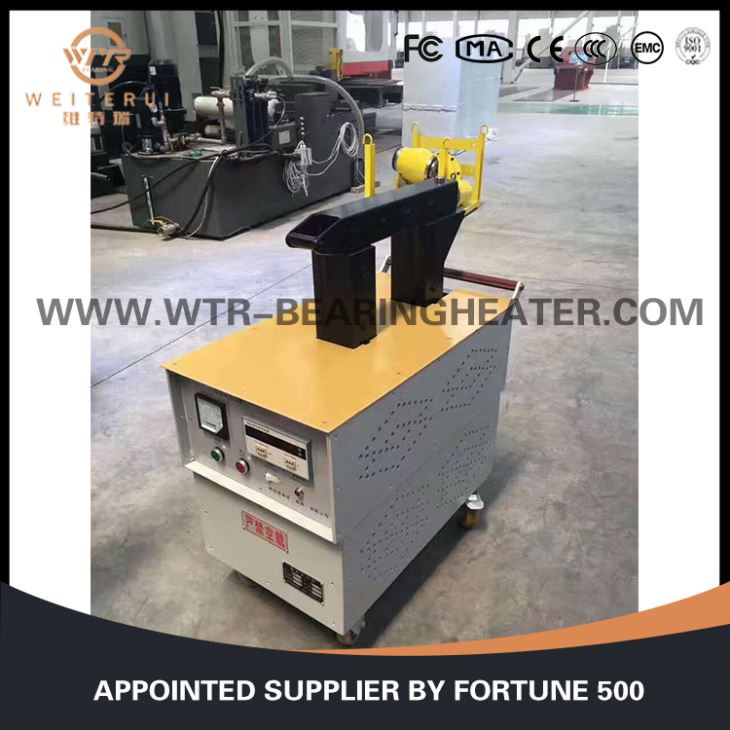
At our company, we offer a range of high - quality bearing heaters designed to meet the diverse needs of our customers. Our High Performance Movable Bearing Induction Heater For Sale is a versatile solution that can efficiently heat bearings of various sizes and types. This heater uses advanced induction heating technology, which provides fast and uniform heating, minimizing the impact of bearing clearance on the heating process.
Our Safe Stable Bearing Induction Heater is another product that takes bearing clearance into account. It is equipped with precise temperature control systems, allowing users to set the desired heating temperature accurately. This ensures that the bearing is heated to the appropriate temperature, regardless of its clearance, reducing the risk of thermal damage.
In addition, our Multi - Purpose Induction Heater is suitable for a wide range of applications, including those with different bearing clearances. It offers adjustable power settings, enabling users to customize the heating process according to the specific requirements of the bearing.
Conclusion
The bearing clearance has a profound effect on the heating process when using a bearing heater. It influences heat transfer efficiency, thermal expansion, fit, and heating time. As a bearing heater supplier, we are committed to providing our customers with high - quality products and professional advice on bearing clearance selection.
By understanding the relationship between bearing clearance and the heating process, our customers can optimize the performance of their bearing heaters, reduce energy consumption, and extend the service life of their bearings. If you are interested in our bearing heaters or need more information on bearing clearance and the heating process, please feel free to contact us for procurement and further discussion. We look forward to working with you to find the best solutions for your bearing heating needs.
References
- Harris, T. A., & Kotzalas, M. N. (2007). Rolling Bearing Analysis. Wiley.
- Kannel, D. L. (2009). Machinery's Handbook. Industrial Press.
- SKF Bearing Handbook. SKF Group.