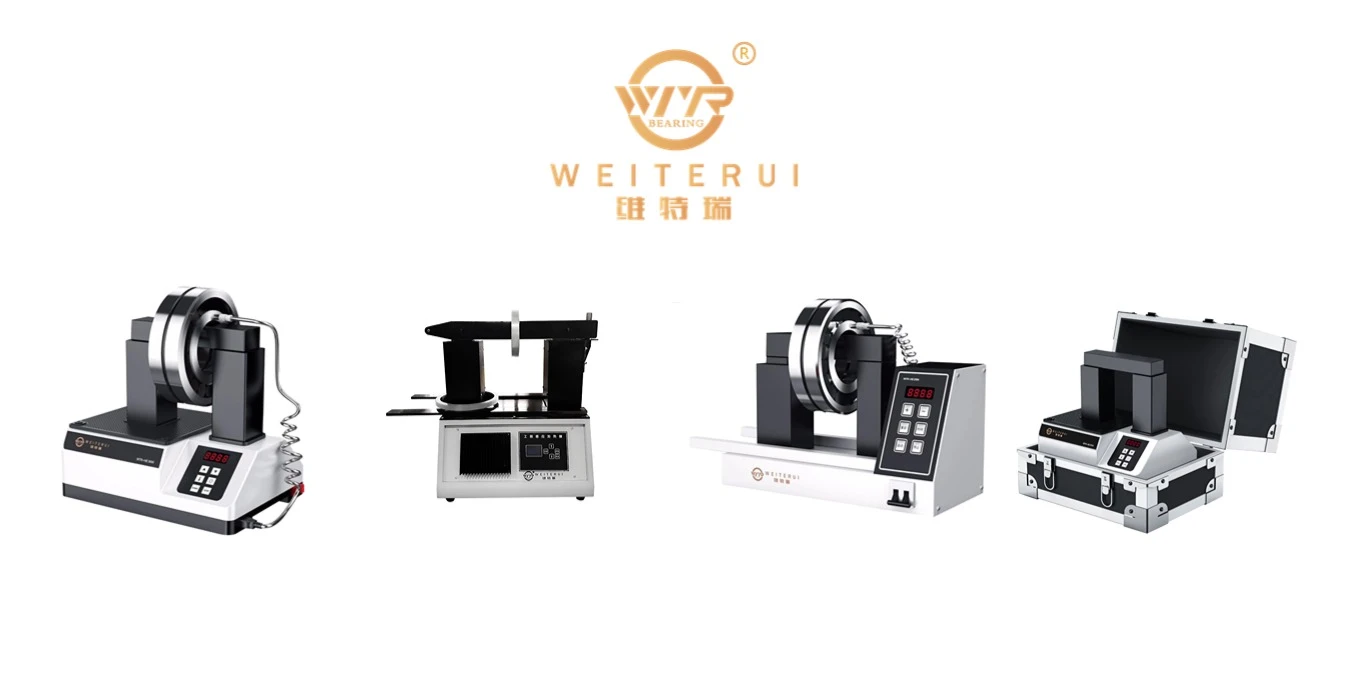

Introduction to characteristics of electromagnetic induction heaters
Bearing induction heater, also known as bearing heater or electromagnetic induction heater, is a type of heating tool. It is mainly used to heat various types of metal parts such as bearings, gears, bushings, etc. to achieve interference assembly or other Heat treatment requirements. Its characteristics are mainly reflected in the following aspects:
1. High efficiency and energy saving
Fast heating speed: The induction heater can quickly heat the workpiece to the required temperature, and can even reach high temperature in a very short time (such as within 1 second), which greatly shortens the heating time and improves work efficiency.
Low power consumption: Since the induction heater can choose to heat locally instead of heating the entire workpiece, the power consumption is relatively small, which helps save energy and reduce consumption.
2. Precise control
Adjustable and controllable temperature: The induction heater can adjust the operating frequency and power of the equipment as needed, thereby accurately controlling the heating temperature and time to ensure the ideal heat treatment effect of the workpiece.
High degree of automation: Modern bearing induction heaters are mostly controlled by microcomputers, which can automatically detect equipment faults, automatically adjust power, and have soft start/stop functions, which greatly improves the automation of the heating process.
3. Safe and reliable
No open flame, no pollution: The induction heater uses the principle of electromagnetic induction to heat, without the need for open flames or oil baths, thus avoiding the risk of fire and environmental pollution.
Automatic demagnetization: Some high-quality bearing induction heaters also have an automatic demagnetization function, which can automatically remove the magnetism on the workpiece after heating, avoiding the negative impact on subsequent work caused by magnetic residue.
4. Versatility
One machine for multiple purposes: Induction heaters can not only be used for heating and heat treatment, but can also complete various heat treatment processes such as quenching, annealing, and tempering, as well as other work such as welding, smelting, and thermal assembly, and are highly flexible.
Wide scope of application: Bearing induction heaters are suitable for heating treatment of a variety of metal workpieces, including bearings, gears, bushings, etc., and are widely used in power plants, textile mills, papermaking, chemical industry, petroleum, machinery, mine maintenance and other fields. Machinery manufacturing and repair.
5. Easy to operate
Easy to install and maintain: Induction heaters are usually compact in design and simple in structure, making them easy to install on production lines and perform routine maintenance.
Friendly operation interface: Modern induction heaters are often equipped with an intuitive operation interface and display screen, making it convenient for users to set up and monitor the heating process.
To sum up, bearing induction heaters play an important role in the field of heating and heat treatment of metal workpieces with their advantages of high efficiency, energy saving, precise control, safety and reliability, versatility and easy operation.